PRP After Hair Transplant Surgery: Why It Is Essential for Healing and Long-Term Results
Hair transplant surgery — whether performed locally or abroad — is a significant investment in both your appearance and your confidence. One of the most common questions patients ask after surgery is: “What can I do to maximise my results?”
As a clinician with extensive experience in hair loss and post–hair transplant care, I strongly believe that PRP after hair transplant surgery is an essential part of the recovery process. When used correctly, it supports healing, improves graft survival, and helps optimise both early and long-term outcomes.
If you are new to PRP, you may find it helpful to first read our main guide to
PRP for hair loss treatment in Northern Ireland.
What Is PRP and iPRF?
PRP (Platelet-Rich Plasma) is a concentration of your own platelets obtained from a small blood sample. These platelets release growth factors that stimulate healing, tissue regeneration, and blood vessel formation.
In my practice, I use injectable Platelet-Rich Fibrin (iPRF), a more advanced form of platelet concentrate. iPRF provides a more sustained release of growth factors over time compared with many standard PRP preparations.
Each treatment typically produces between 4 and 8 ml of iPRF, which I personally inject by hand using a precise technique to target the areas that need it most.
For a broader explanation of how PRP works in regenerative medicine, you can also read this overview from the National Institutes of Health (NIH).
Why Combine PRP With Hair Transplant Surgery?
Both clinical studies and real-world experience show that combining PRP with hair transplant surgery can significantly enhance outcomes compared with surgery alone.
When PRP is used after a transplant, it helps create a healthier healing environment for the grafts during their most vulnerable early phase.
This approach is now widely used in hair restoration clinics internationally, including in the UK, where combining PRP with surgery is increasingly considered best practice. For example, Hair GP outlines how PRP can enhance healing and density when used alongside transplantation:
Key Benefits of PRP After Transplant
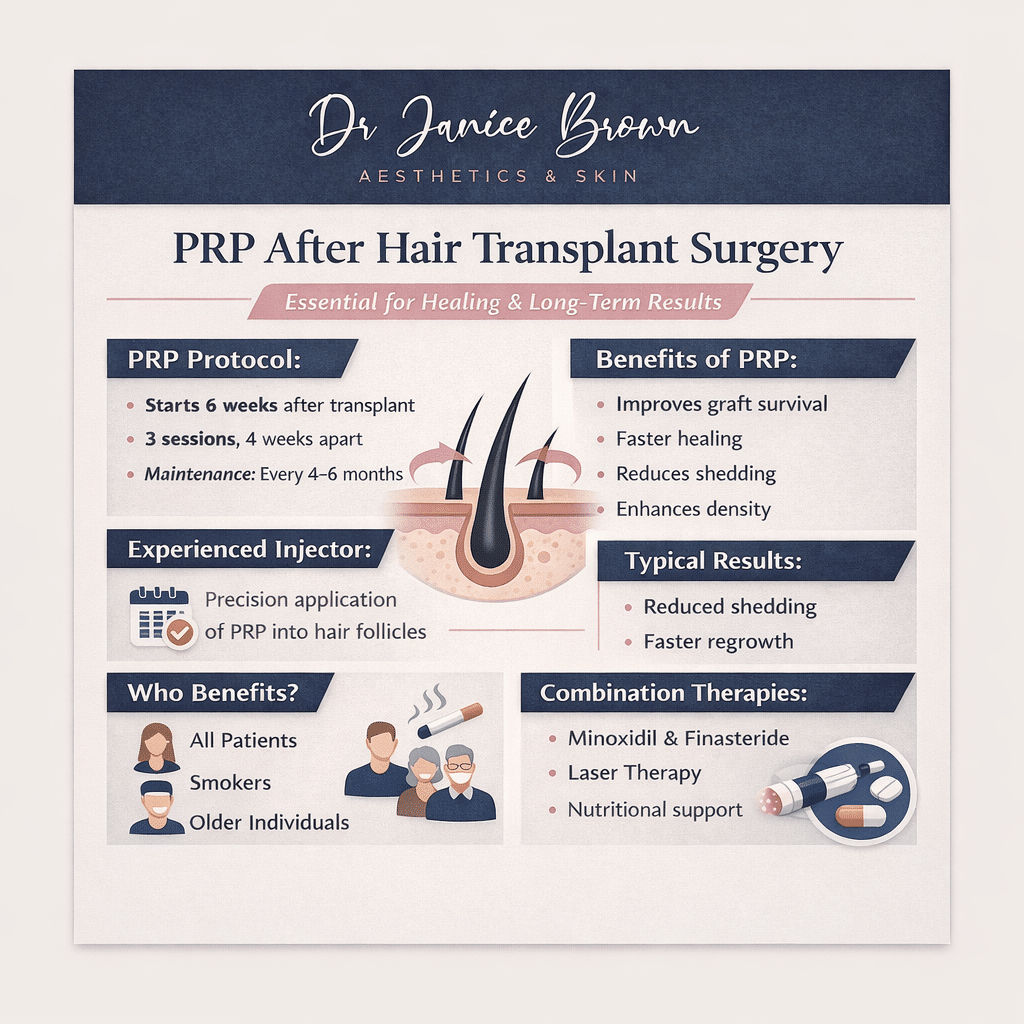
- Improved graft survival and graft take
- Faster tissue healing
- Reduced post-operative inflammation
- Reduced shock loss and excessive shedding
- Earlier visible regrowth
- Improved final hair calibre and density
In my own practice, I consistently observe faster regrowth, better quality hair, and smoother recovery in patients who include PRP as part of their post-operative care.
My Post-Transplant PRP Protocol
At my clinic, PRP is recommended for all patients following hair transplant surgery, unless a surgical consultant has advised otherwise.
Standard Treatment Timeline
- First session: Approximately 6 weeks after surgery
- Initial course: 3 sessions
- Interval: Every 4 weeks
- Maintenance: Every 4–6 months
If you have had your transplant abroad — particularly in destinations such as Turkey — we regularly see patients in our clinic for structured post-operative PRP care. You can learn more about our hair restoration services in Belfast and Northern Ireland.
When Will You See Results?
Hair growth is a slow biological process, and realistic expectations are important.
Most patients notice:
- Reduced shedding within 2–4 weeks of the first PRP session
- Early regrowth within 3–4 months
- Progressive thickening and density over 6–12 months
PRP does not replace surgery — it optimises the environment in which your transplanted hair grows.
Who Benefits Most From PRP After Hair Transplant?
In my view, all patients benefit from PRP after hair transplant surgery.
PRP is particularly valuable for:
- Patients seeking faster healing and smoother recovery
- Those prone to excessive shedding
- Smokers and older patients (who are at higher risk of graft loss)
- Patients who have had surgery abroad and want to optimise their results
You may also wish to read our guide on common causes of hair loss and treatment options to understand how PRP fits into long-term hair health.
The Role of Lifestyle in PRP Success
The quality of PRP depends on your own biology.
Factors that influence how effective your PRP will be include:
- Smoking status
- Nutrition
- Exercise
- Sleep and general health
A healthier patient produces higher-quality PRP and achieves better regenerative outcomes.
Combining PRP With Other Hair Treatments
PRP works best as part of a combined treatment strategy.
Common Combination Therapies
- Minoxidil
- Finasteride
- Low-level laser therapy
- Nutritional support
These treatments are discussed in more detail in our complete guide to hair loss treatment options.
Safety and Side Effects
Because PRP uses your own blood, it has an excellent safety profile when performed by an experienced clinician.
Most side effects are mild and temporary, including:
- Mild scalp tenderness
- Occasional bruising
- Temporary redness or swelling
For a medical review of PRP safety in hair restoration, you can refer to this systematic review.
The Evidence Base
Multiple clinical studies and systematic reviews suggest that PRP used as an adjunct to hair transplant surgery can:
- Improve graft survival
- Accelerate early regrowth
- Increase early hair density
A useful clinical summary is available from Liv Harley Street Hospital here: Efficacy of PRP as an Adjunct to Hair Transplantation – Systematic Review
Conclusion
PRP after hair transplant surgery is not a luxury — it is an essential part of optimising healing, protecting grafts, and improving long-term outcomes.
If you have recently had a hair transplant — locally or abroad — a personalised consultation to discuss post-transplant PRP is one of the most valuable steps you can take in your recovery journey.
To arrange an appointment, book directly here