Tretinoin vs Retinol | Which Is Better for Acne, Ageing and Skin Quality?
Retinol and tretinoin are two of the most talked-about skincare ingredients for acne, pigmentation, fine lines and skin ageing. However, many patients are unsure which one is stronger, which works faster and whether prescription tretinoin is really worth it.
Although both ingredients belong to the retinoid family and are derived from vitamin A, they work differently within the skin. Understanding these differences helps you choose the most appropriate treatment for your skin concerns, sensitivity and long-term skin goals.
At Dr Janice Brown Aesthetics & Skin in Royal Hillsborough near Belfast, prescription skincare and regenerative skin treatments are approached using evidence-based protocols in a dentist-led clinic with an MSc in Aesthetic Medicine and over 16 years of clinical experience.
Tretinoin vs Retinol: Key Facts
What is tretinoin?
Tretinoin is a prescription-strength retinoid. It works directly as retinoic acid, helping increase skin-cell turnover and support collagen production.
What is retinol?
Retinol is an over-the-counter retinoid. The skin must convert it into retinoic acid before it becomes active, so it usually works more gradually.
Which is stronger?
Tretinoin is stronger than retinol and often produces faster results.
Which is better for sensitive skin?
Retinol is often better tolerated by sensitive or beginner skin types because it works more gently.
Tretinoin vs Retinol Comparison Table
| Feature | Tretinoin | Retinol |
|---|---|---|
| Strength | Prescription-strength | Over-the-counter |
| How it works | Works directly as retinoic acid | Must convert into retinoic acid first |
| Speed of results | Usually faster | More gradual |
| Irritation risk | More common initially | Usually milder |
| Best for acne | Persistent or more active acne-prone skin | Mild congestion or beginner skincare routines |
| Best for ageing | Photoageing, fine lines and texture | Early signs of ageing and maintenance |
What Is Retinol?
Retinol is a vitamin A derivative found in many over-the-counter skincare products. Once applied, the skin gradually converts it into retinoic acid, the active form used by skin cells.
Because this conversion takes time, retinol tends to work more slowly than prescription retinoids. However, it can still improve:
- fine lines and wrinkles
- uneven skin tone
- mild pigmentation
- skin texture
- early signs of ageing
Retinol can be a useful starting point for patients who are new to retinoids or who have sensitive skin.
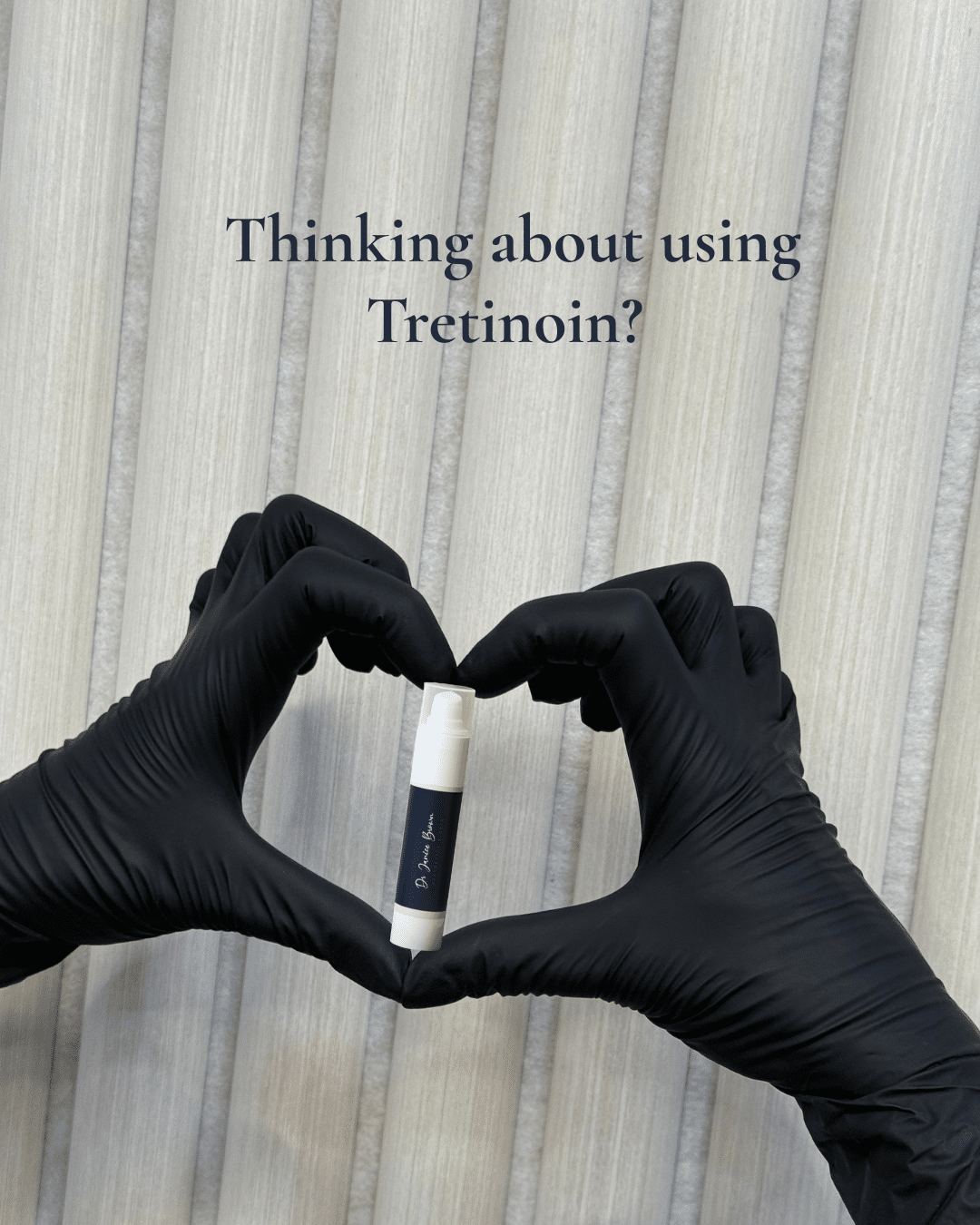
What Is Tretinoin?
Tretinoin, also known as retinoic acid, is a prescription-strength retinoid often used for acne, texture, pigmentation and photoageing.
Unlike retinol, tretinoin does not need to convert within the skin. Therefore, it acts more directly and more powerfully on cell turnover and collagen stimulation.
Tretinoin may help improve:
- acne and clogged pores
- fine lines and wrinkles
- pigmentation
- sun damage
- uneven skin texture
Tretinoin vs Retinol: Which Works Faster?
Tretinoin generally works faster because it is already in its active form when applied to the skin. Retinol must first convert into retinoic acid before the skin can use it effectively.
As a result, patients using tretinoin often notice improvement in acne, pigmentation and skin texture sooner than patients using over-the-counter retinol products.
Tretinoin vs Retinol for Acne
Tretinoin is generally more effective for acne because it increases skin-cell turnover more actively and helps prevent clogged pores.
Retinol may still improve mild congestion and early acne concerns. However, prescription tretinoin is often more suitable for persistent acne-prone skin when used under professional guidance.
Tretinoin vs Retinol for Ageing Skin
Both ingredients can improve signs of ageing. However, tretinoin has stronger evidence for improving photoageing, skin texture and fine lines over time.
Retinol can still improve skin quality gradually and may suit patients who prefer a gentler approach or cannot tolerate prescription-strength retinoids.
What Are the Side Effects?
Both retinol and tretinoin can cause:
- dryness
- flaking
- temporary redness
- skin irritation
- increased sensitivity to sunlight
However, tretinoin is more likely to cause irritation, especially during the early adjustment phase. This is why correct use, gradual introduction and daily SPF are essential.
How to Start Retinoids Safely
Retinoids should be introduced gradually. For many patients, this means starting two or three nights per week and increasing slowly as the skin adjusts.
Daily SPF is essential when using retinol or tretinoin. Moisturiser can also help reduce dryness, irritation and flaking.
Can Tretinoin and Retinol Be Combined With Other Treatments?
In many cases, prescription skincare forms part of a wider skin health plan. Depending on your goals, treatments such as Tixel skin rejuvenation, polynucleotides, PRP and medical chemical peels may support collagen stimulation, texture improvement and overall skin quality.
Prescription Skincare in Hillsborough Near Belfast
If you are unsure whether retinol or prescription tretinoin is more suitable for your skin, a consultation allows your skin type, sensitivity and goals to be assessed properly.
Further Reading
For more information on topical tretinoin and retinoids, you can read guidance from NHS medicines information on tretinoin.
Frequently Asked Questions About Tretinoin and Retinol
Is tretinoin stronger than retinol?
Yes. Tretinoin is stronger because it works directly as retinoic acid, while retinol must convert into retinoic acid inside the skin first.
Does tretinoin work faster than retinol?
Generally, yes. Tretinoin usually works faster because it is already in its active form when applied to the skin.
Is retinol better for beginners?
Retinol is often better tolerated by beginners because it works more gradually and usually causes less irritation.
Can tretinoin help acne?
Yes. Tretinoin can help acne-prone skin by increasing cell turnover and helping to prevent clogged pores.
Do I need SPF when using retinol or tretinoin?
Yes. Daily SPF is essential because retinoids can increase skin sensitivity to sunlight.
Can I use tretinoin every night?
Some patients can build up to nightly use, but tretinoin should usually be introduced gradually to reduce irritation.